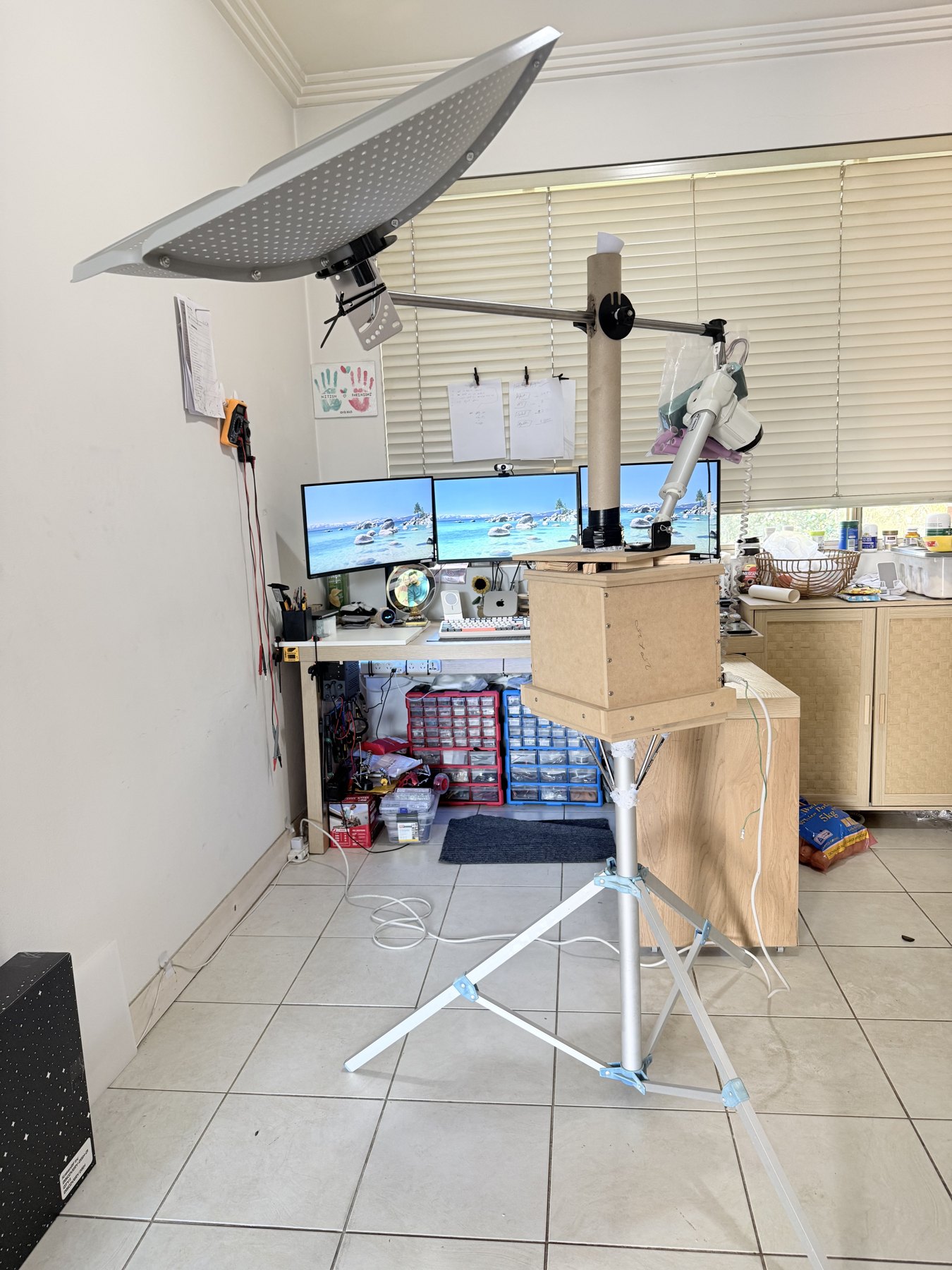
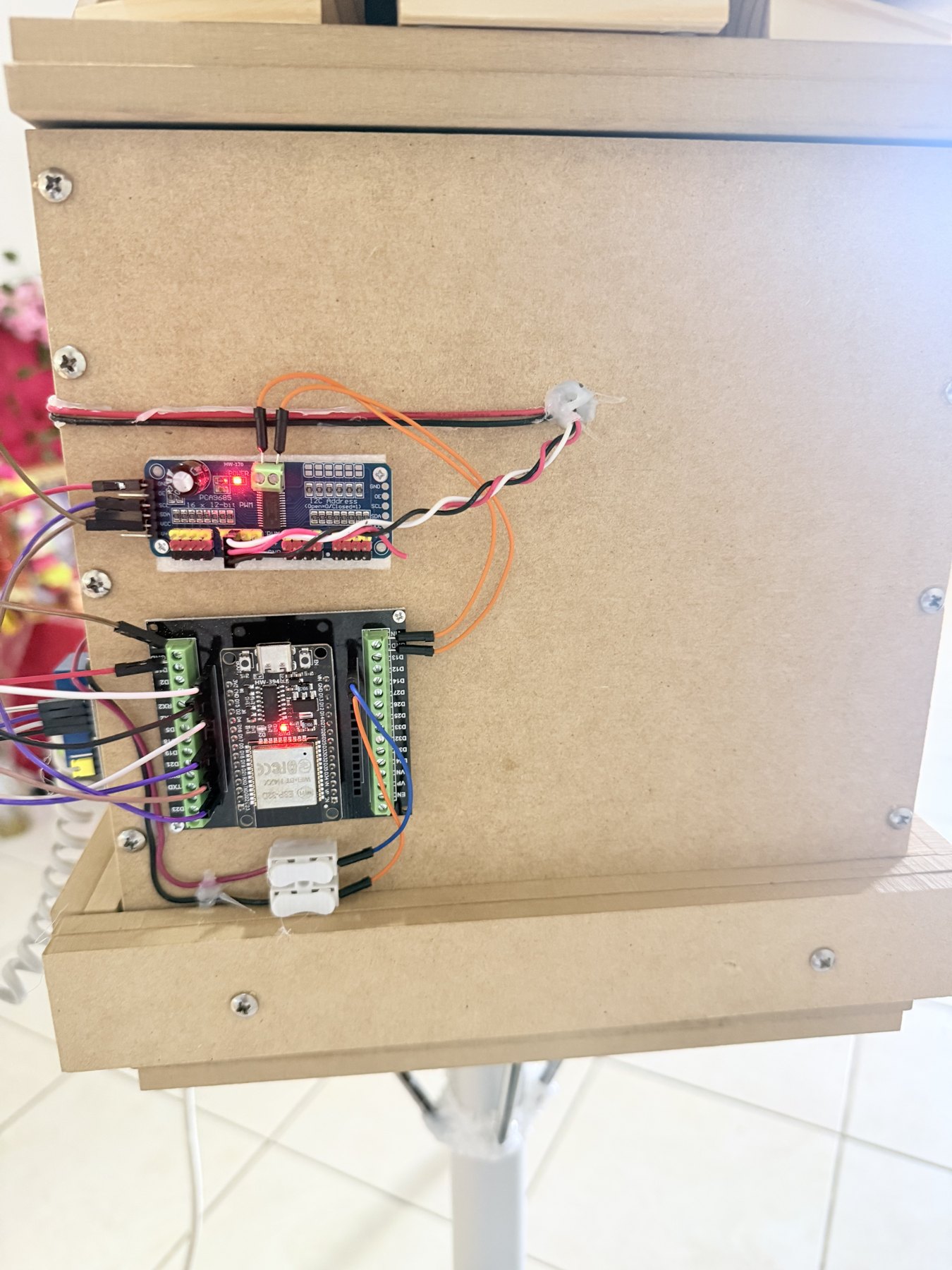
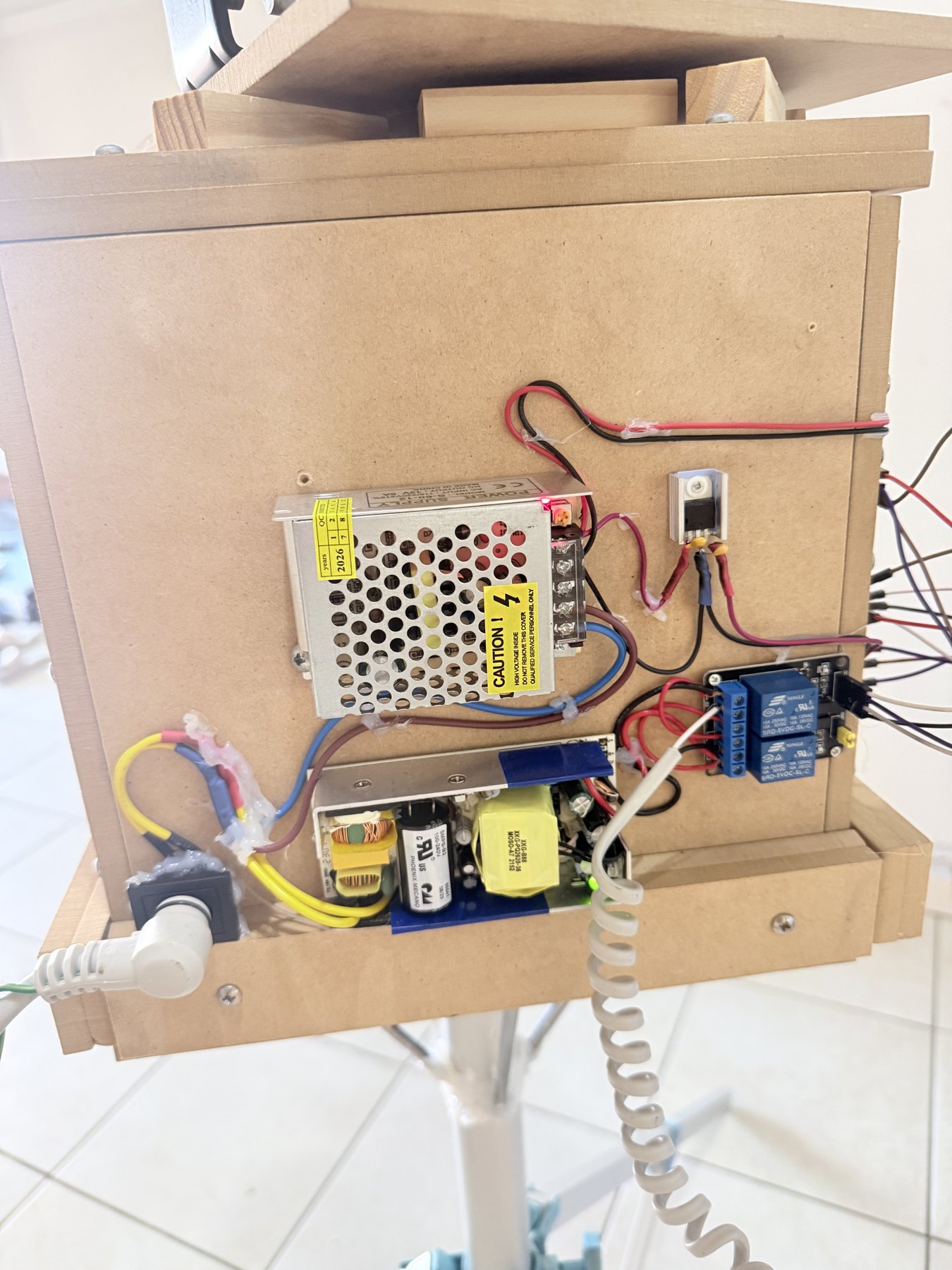
A low-cost two-axis ground station for pointing a 60 cm rectenna dish at Low Earth Orbit satellites, designed and implemented during my Master of Engineering (Electrical) coursework at Western Sydney University. The final build integrates an ESP32 browser-control interface, high-torque servo azimuth drive, relay-based actuator control, and a 24 V linear actuator elevation stage.
60-second real hardware demonstration
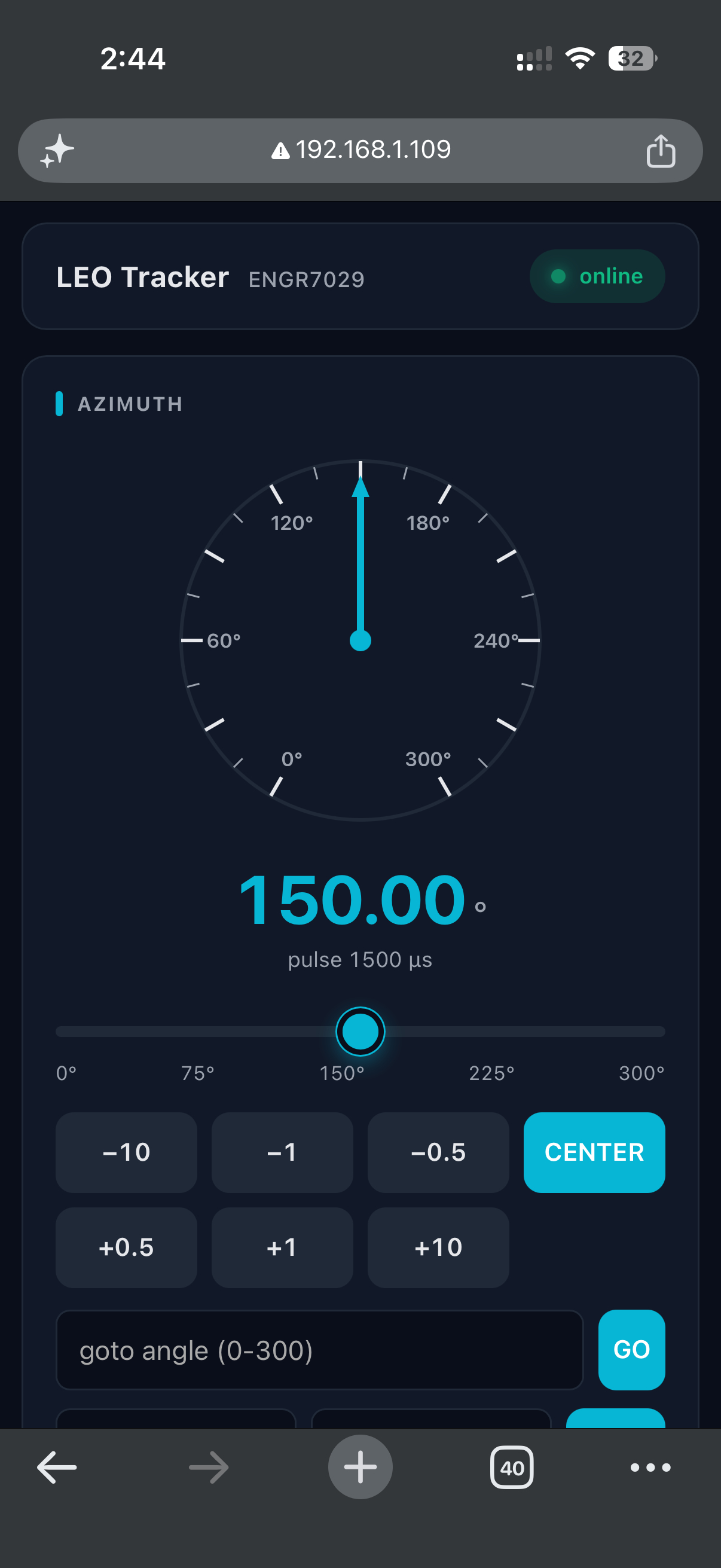
The video shows the ESP32-hosted web interface controlling the actual Version 2 tracker hardware. A phone browser sends azimuth commands while the 60 cm dish assembly responds through the high-torque servo drive and actuator-controlled structure.
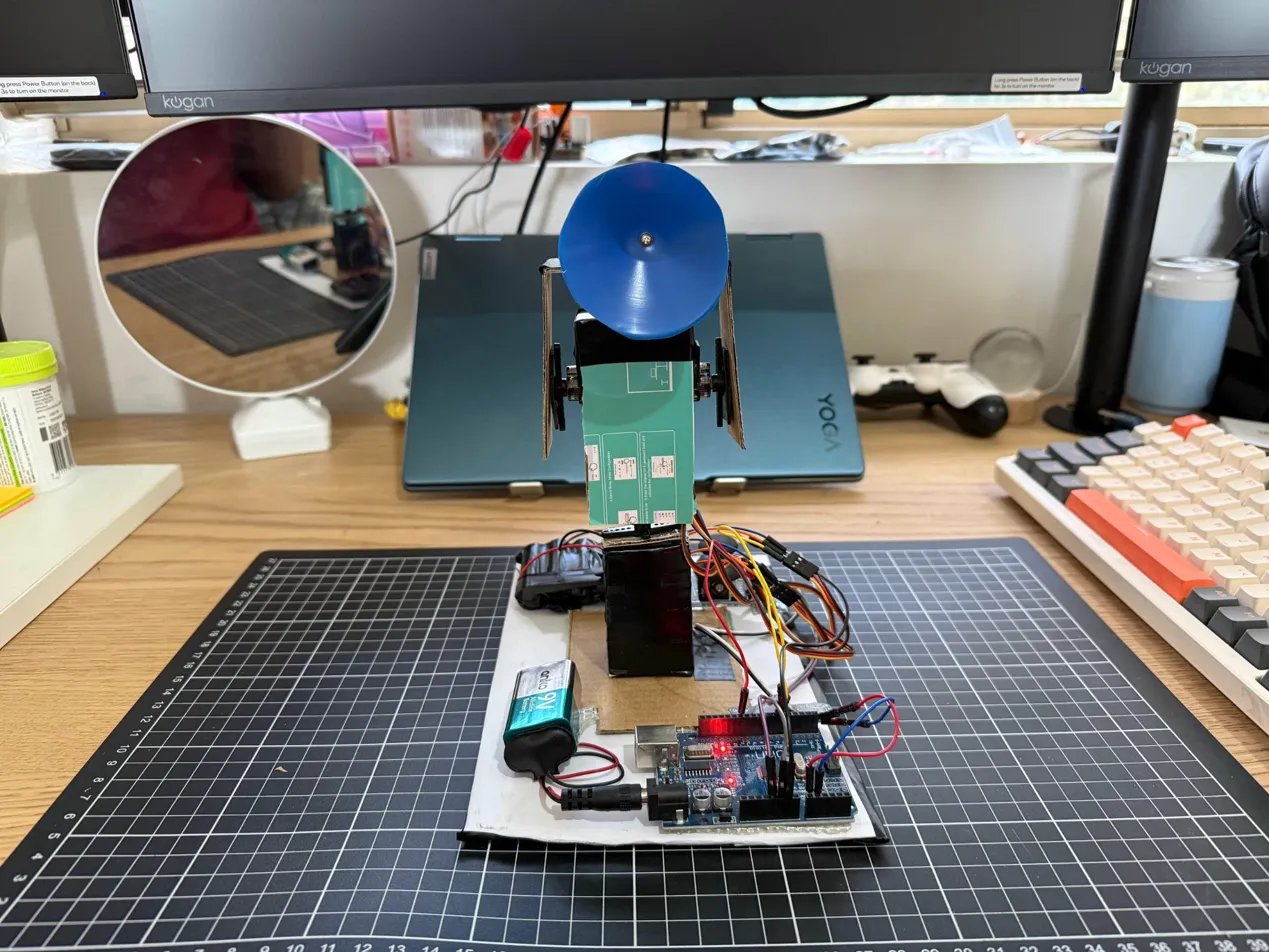
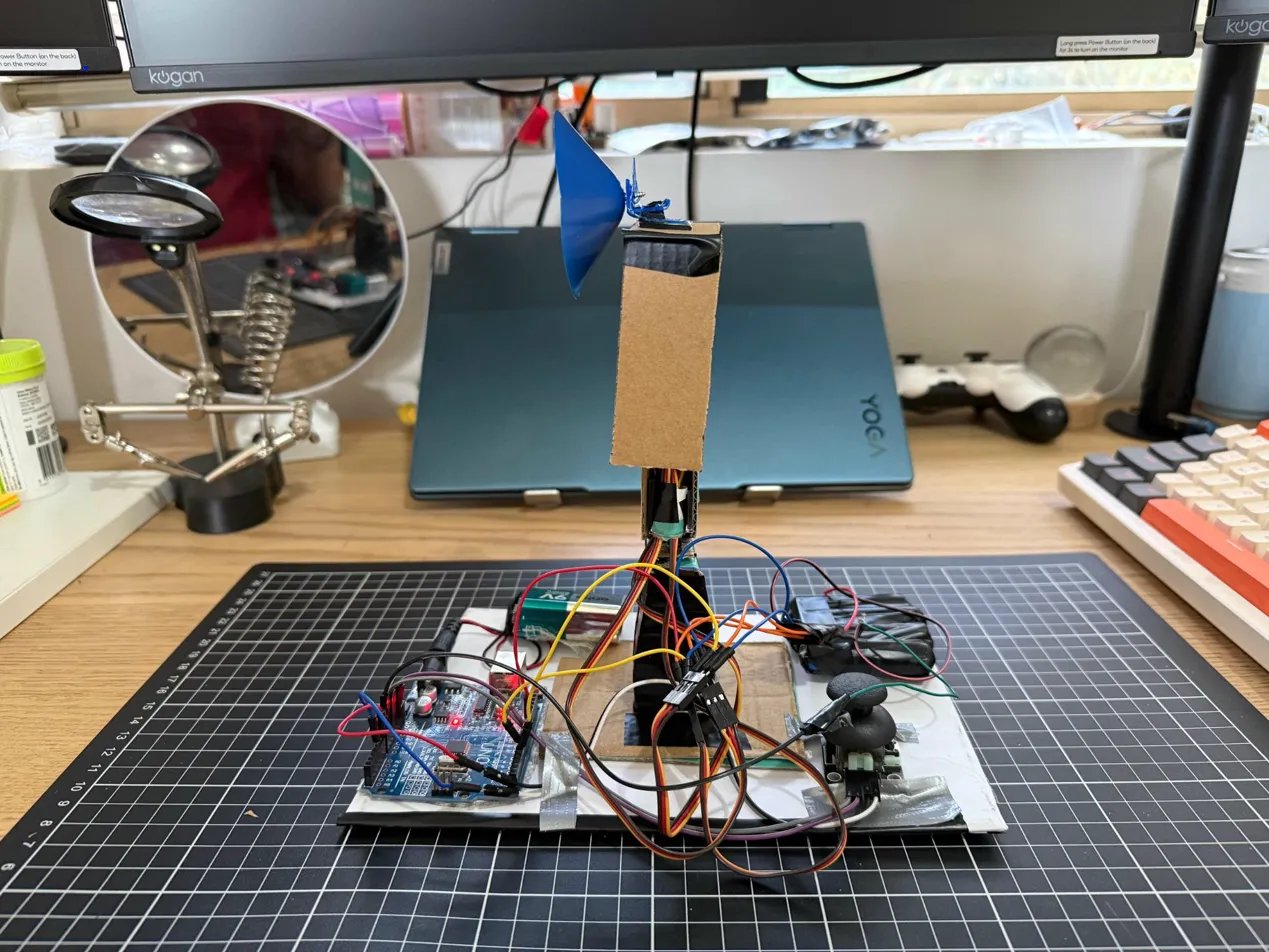
Version 1 proof-of-concept demonstration
This first build proved the movement concept before the final hardware upgrade. The prototype used an Arduino Uno, MG996R servos, joystick control, and a lightweight foamboard structure to validate independent azimuth and elevation motion.
LEO satellites cross the visible sky in minutes, with peak angular rates above 1°/s near zenith. A fixed receive dish cannot maintain alignment long enough for reliable Space-Based Solar Power microwave energy harvesting.
A two-axis dish tracker using an ESP32 web server, azimuth servo drive, relay-controlled 24 V linear actuator, and phone browser interface for independent azimuth/elevation control.
The project brings mechanical tracking, web-based embedded control, and Skyfield/TLE orbital prediction into a practical AUD $250 prototype that can be demonstrated and replicated.
ENGR7028 proof of concept
Autumn 2026
Recommended next stage
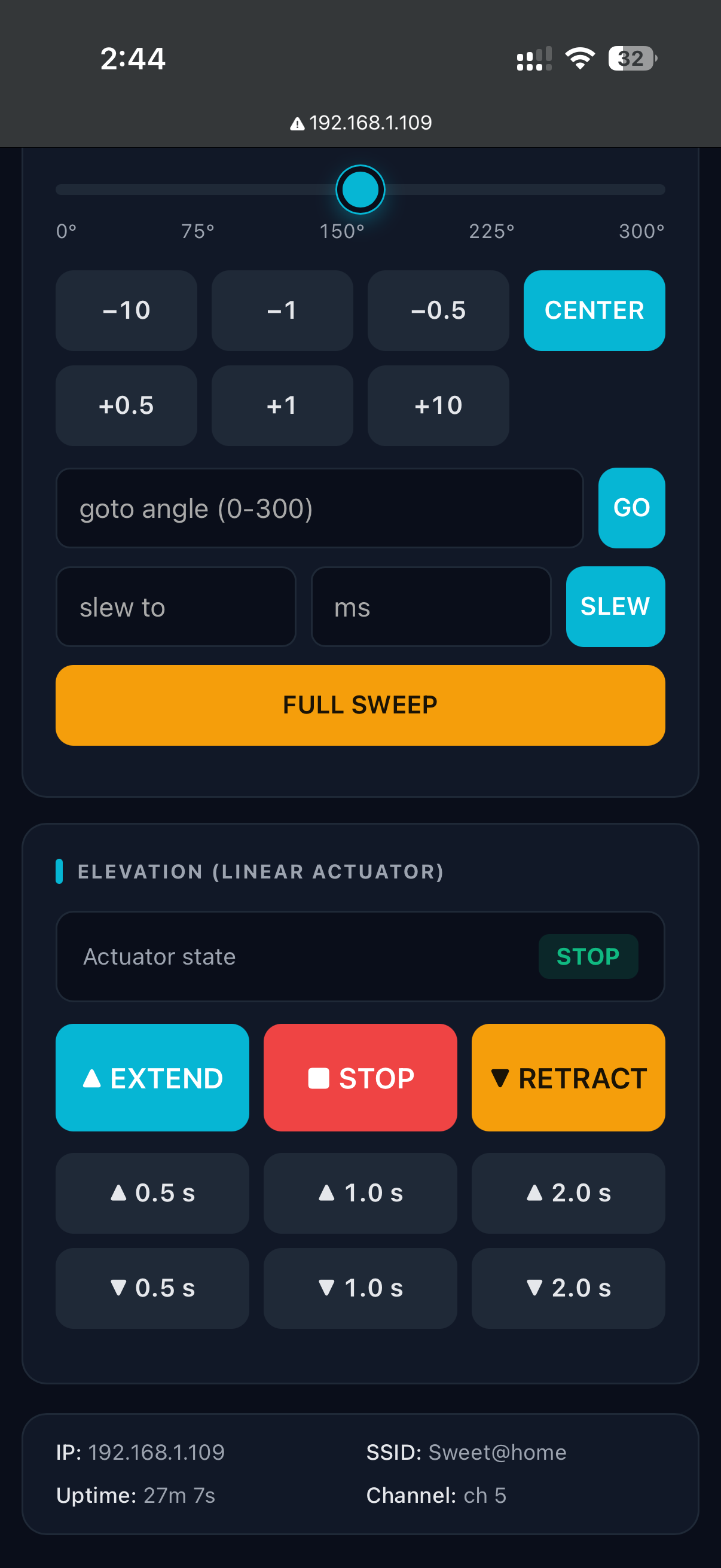
Servo-driven azimuth stage controlled from the ESP32 web interface with center, relative-step, goto-angle, and full-sweep commands.
24 V linear actuator provides dish elevation control through extend, stop, retract, and timed pulse commands.
Phone browser control uses the ESP32 web server with station-mode Wi-Fi and access-point fallback for field operation.
Azimuth drive was upgraded from 13 kg·cm V1 servos to a 380 kg·cm V2 digital servo for the real dish payload.
| Area Tested | Target | Achieved | Engineering Evidence |
|---|---|---|---|
| Azimuth pointing | Within 5 degrees | 3.2 degrees mean error | Bench calibration and repeated movement checks across the servo sweep |
| Elevation pointing | Within 3 degrees | 1.1 degrees mean error | Linear actuator angle measurement and controlled elevation movement |
| Control response | Responsive manual control | Under 50 ms web response | Phone browser commands through the ESP32 web server |
| Build cost | Under AUD $300 | AUD $250 prototype cost | Low-cost component selection with documented hardware build |
Scope note: this portfolio page presents the tracker platform, control electronics, mechanical actuation, and bench testing. Outdoor microwave reception and rectenna energy-harvesting validation remain future work.
Demonstrates a real two-axis dish tracker with 0-300° azimuth movement, 0-75° elevation movement, and a browser interface that can run from a phone in the field.
Shows how a V1 joystick prototype can be upgraded into a V2 ESP32 web-controlled platform with separate servo and actuator power rails.
Achieves 3.2° mean azimuth error and 1.1° mean elevation error during bench testing while keeping total build cost to AUD $250.