HIGH VOLTAGE PROPULSION

Ionic Lifter /
Ion Thruster

High-voltage electrohydrodynamic (EHD) propulsion system demonstrating ionic wind thrust generation. Features custom-built 30kV+ power supply with voltage multiplier cascade and asymmetric capacitor design.

30kV+
High Voltage
EHD
Propulsion Type
Plasma
Ionization
Project Type Experimental Build
Year 2023
Category High Voltage / Propulsion
Voltage 30+ kV DC
Status ⚠ High Voltage

01 Project Overview

The Concept

An ionic lifter (or "lifter") is an electrohydrodynamic (EHD) propulsion device that produces thrust by ionizing air molecules and accelerating the resulting ions in an electric field. This creates a phenomenon known as "ionic wind" or the "Biefeld-Brown effect."

🔬

How It Works

A high-voltage asymmetric capacitor creates a strong electric field. Air molecules near the thin positive electrode (corona wire) become ionized and are accelerated toward the negative electrode (collector), creating momentum transfer and producing measurable thrust.

🚀

Applications

While not practical for large-scale propulsion, ionic lifters demonstrate fundamental principles of electric propulsion, are useful for physics demonstrations, and have potential applications in micro-UAVs and space propulsion research.

02 System Architecture

Power Input
12V DC Input Power Supply Voltage Monitoring
HV Generation
Transformer Oscillator Circuit Step-Up Stage
Voltage Multiplier (Cockcroft-Walton)
Capacitor Cascade Diode Network 30kV+ Output
Thruster Assembly
Corona Wire (+) Collector Grid (-) Asymmetric Structure
Output
Ion Generation Ionic Wind Thrust Force

03 Technical Components

Power
✓ Operational

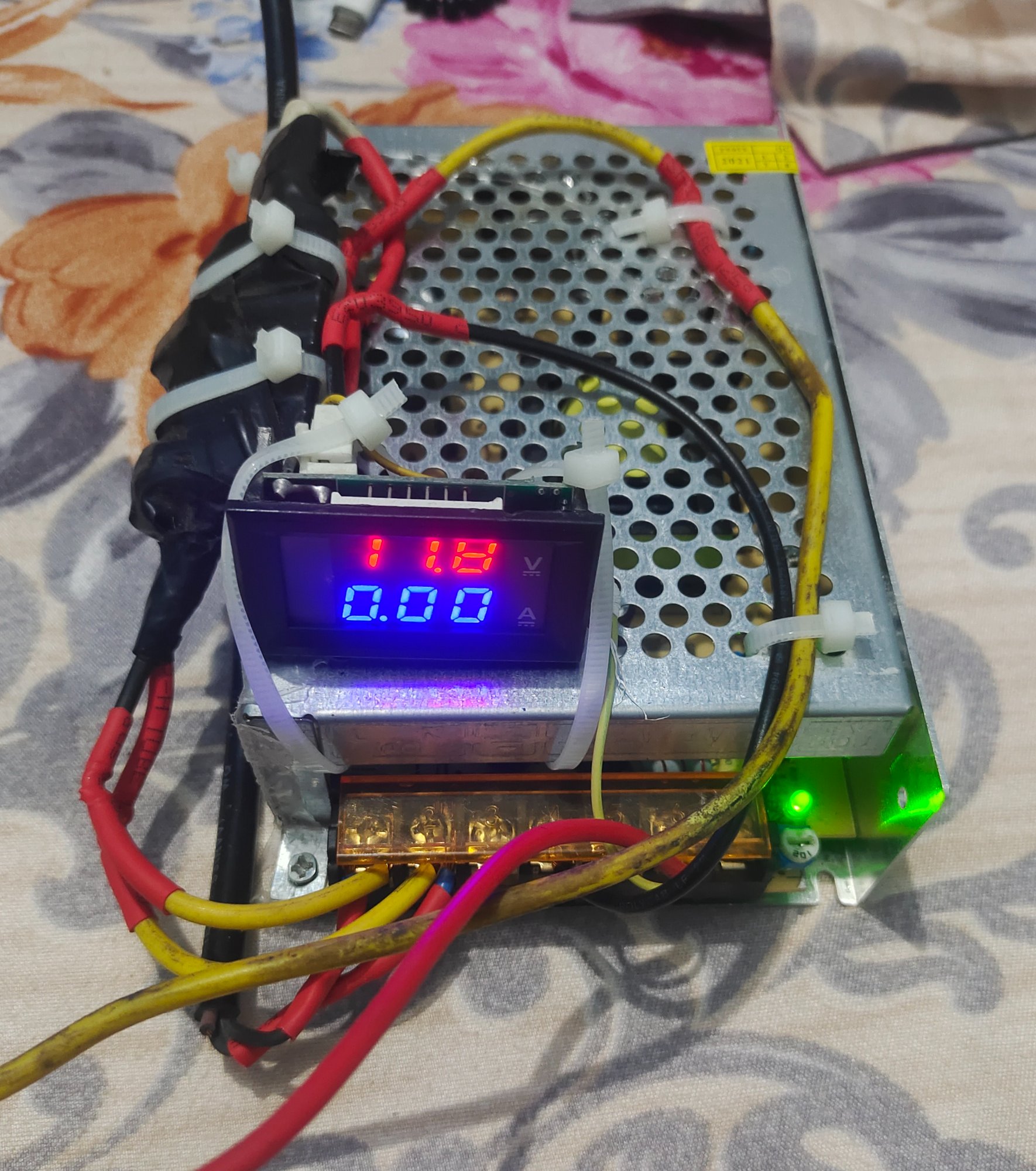
High Voltage Power Supply

Input 12V DC
Output 30+ kV DC
Display Digital V/A Meter
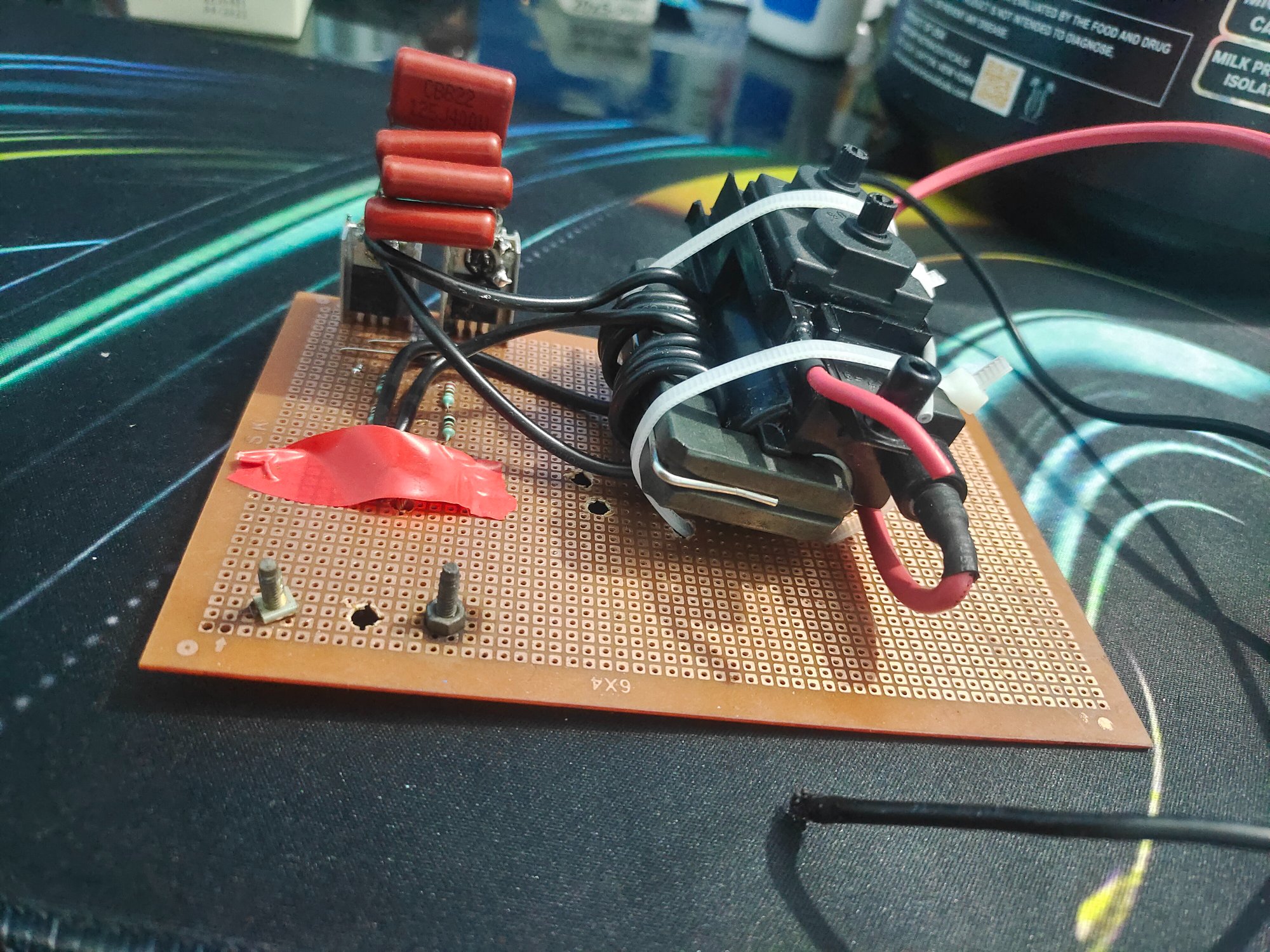
Components Transformer + Oscillator
Safety Current Limiting
✓ Stable 30kV output
✓ Real-time monitoring
✓ Overcurrent protection
Multiplier
✓ Complete

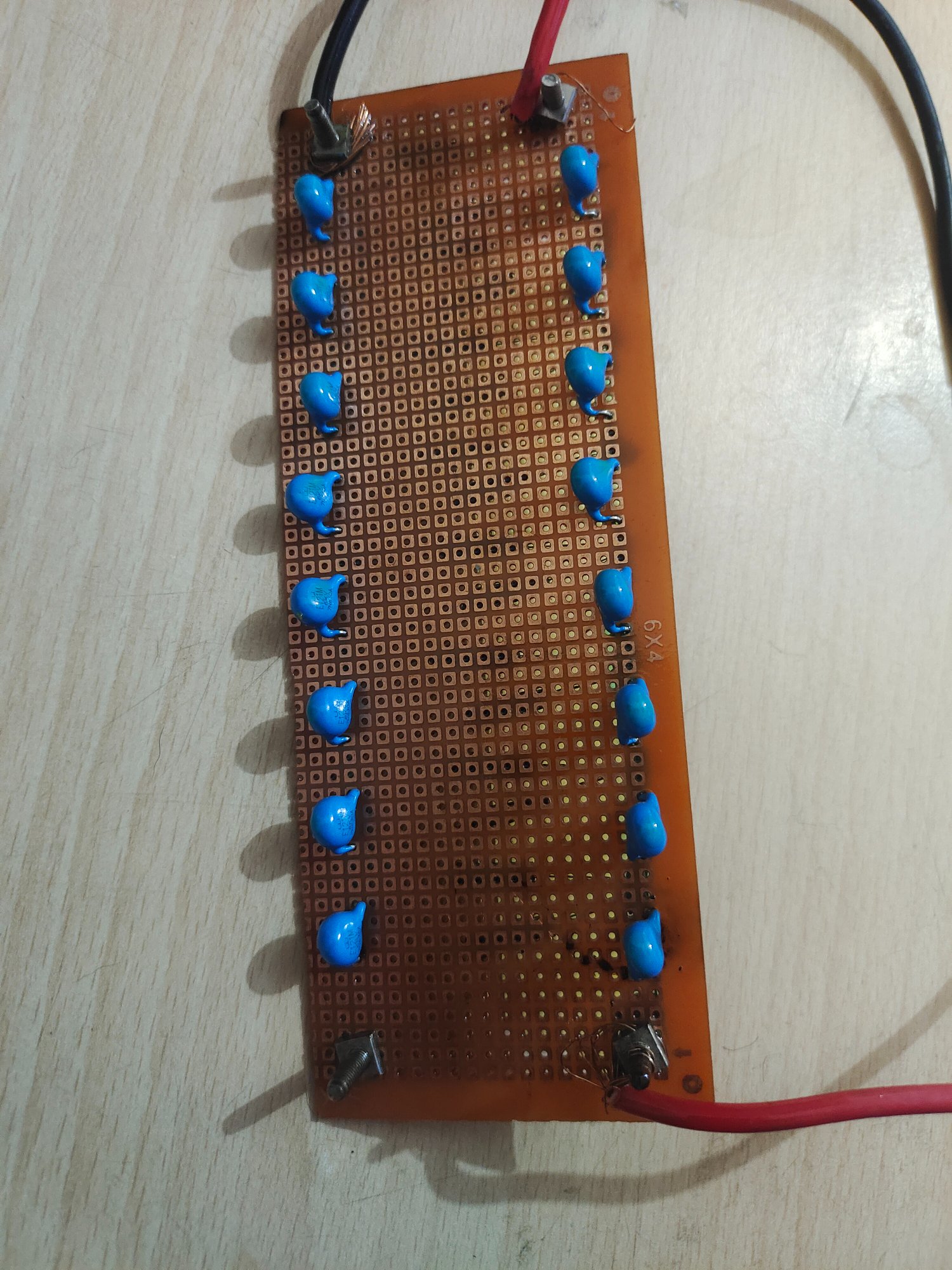
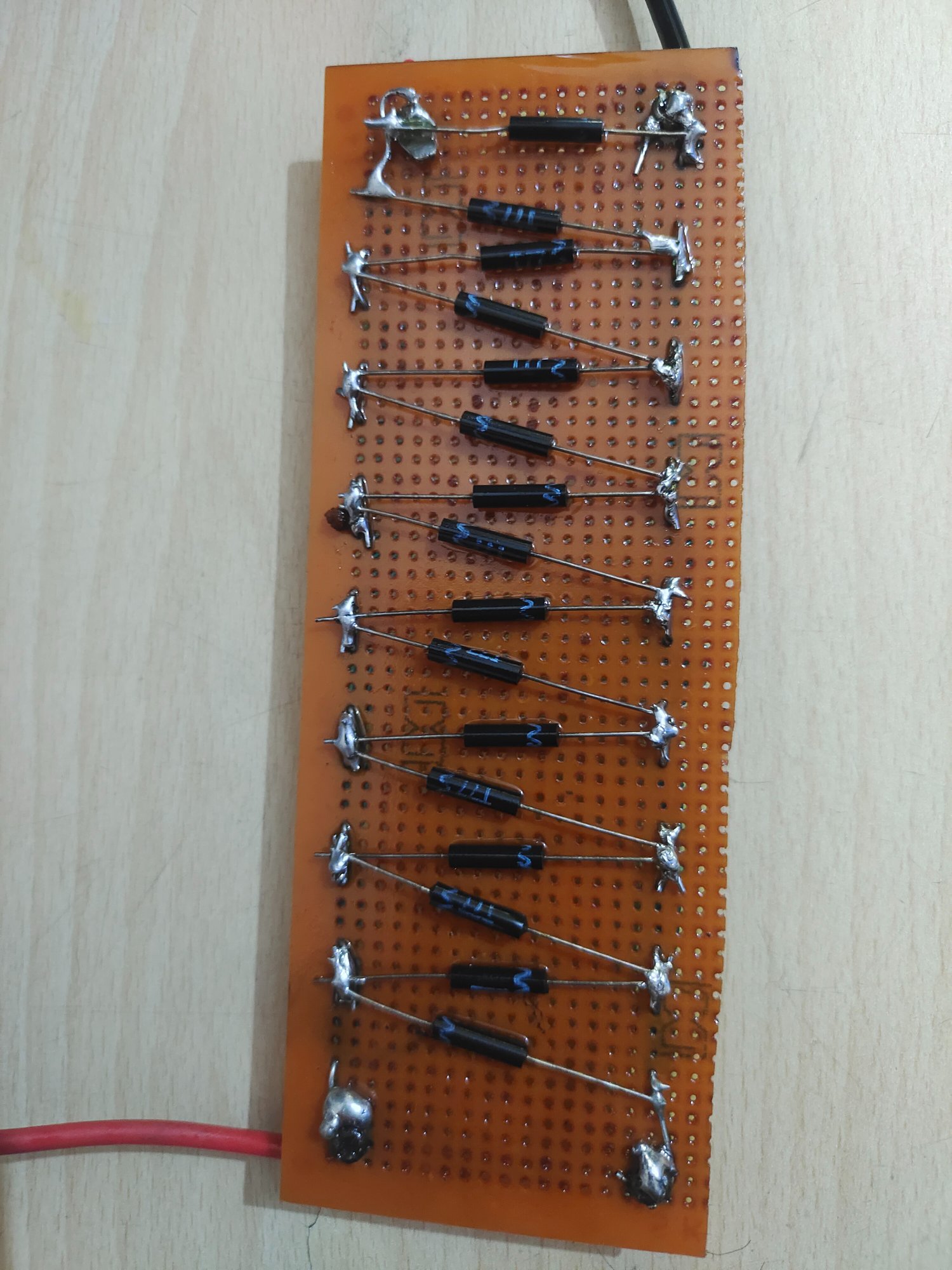
Cockcroft-Walton Voltage Multiplier

Type Cascade Multiplier
Capacitors High-voltage Ceramic
Diodes HV Rectifiers
Stages Multi-stage Cascade
Board Custom PCB
→ Efficient voltage multiplication
→ Symmetrical layout
→ Hand-soldered assembly
Thruster
✓ Built

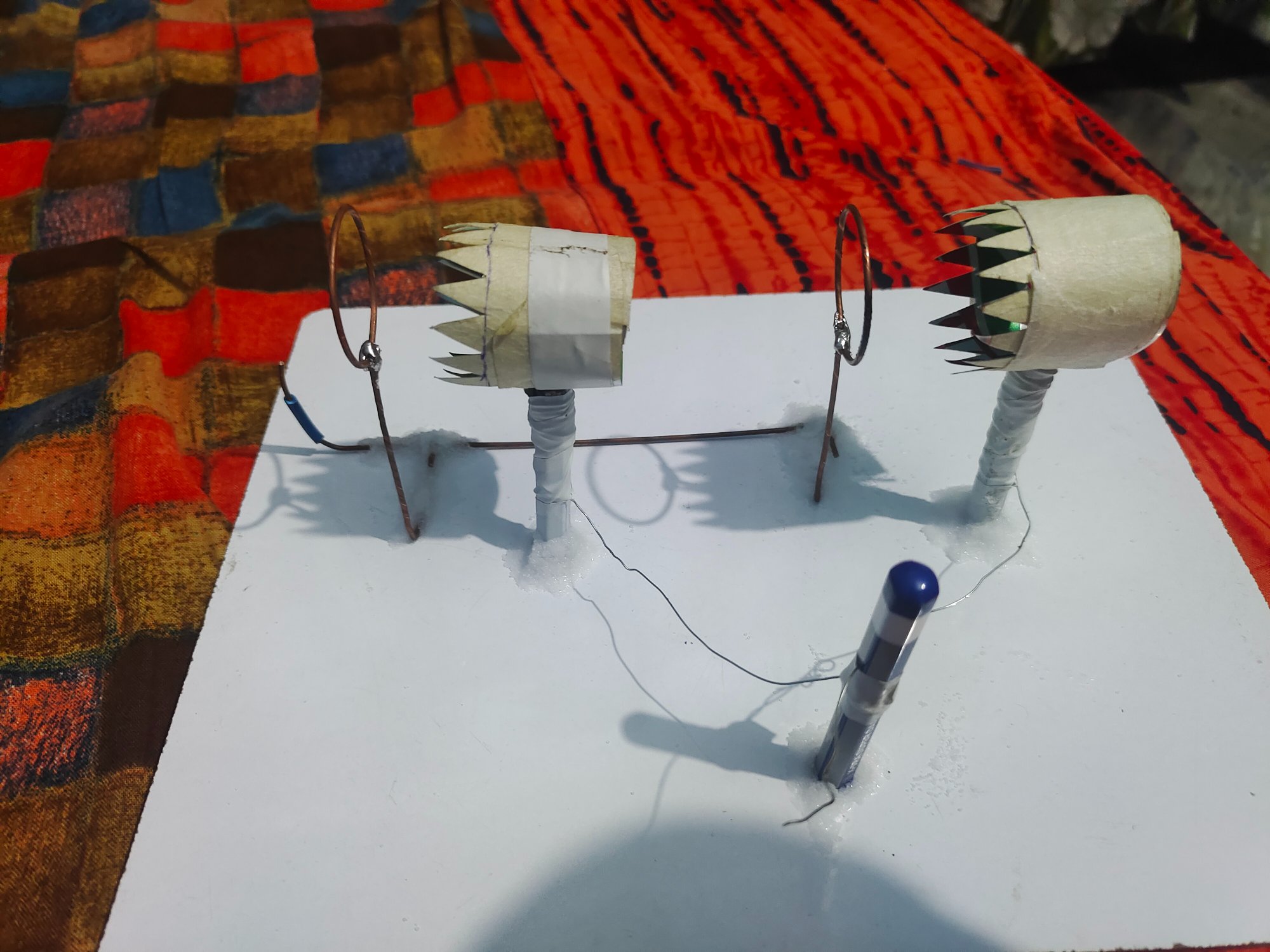
Asymmetric Capacitor Assembly

Positive Thin Corona Wire
Negative Mesh Collector Grid
Frame Lightweight Structure
Material Wire + Foil
Design Asymmetric Geometry
→ Optimized for ion generation
→ Minimal mass
→ Dual collector design

04 Build Gallery

05 Key Achievements & Safety

01

High Voltage Engineering

Successfully designed and built a 30kV+ power supply system from 12V input using transformer step-up and Cockcroft-Walton voltage multiplier cascade. Features real-time voltage/current monitoring and safety current limiting.

02

EHD Propulsion Demo

Demonstrated ionic wind thrust generation through electrohydrodynamic principles. The asymmetric capacitor design produces measurable lift force through momentum transfer from accelerated ions to neutral air molecules.

03

Safety-First Design

Implemented proper high-voltage safety protocols including current limiting, proper insulation, safe discharge procedures, and controlled testing environment. Always prioritized safe operation when working with lethal voltages.

⚠️ HIGH VOLTAGE WARNING

This project involves extremely dangerous high voltages (30kV+) that can cause serious injury or death. This documentation is for educational purposes only. Do not attempt to replicate without proper training, safety equipment, and understanding of high-voltage safety protocols. Always work with supervision from qualified professionals when dealing with high-voltage systems.

06 The Physics Behind It

Ionization

The sharp corona wire creates an intense electric field that ionizes surrounding air molecules, stripping electrons and creating positive ions near the wire.

Acceleration

Positive ions are accelerated away from the positive wire toward the negative collector grid by the strong electric field gradient.

🌪️

Ionic Wind

As ions collide with neutral air molecules, they transfer momentum, creating a directional airflow (ionic wind) that produces thrust on the structure.